WWendell K.Verified Buyer
Item: Tiller + 20V Battery
Our clay bed had gone hard as pavement over winter. This chewed it up 4 inches down without me leaning on it.
2 weeks agoYour cart is empty
Add items to get started

Official StoreTerraGrip Cordless Garden Tiller — 20V Cultivator

Our clay bed had gone hard as pavement over winter. This chewed it up 4 inches down without me leaning on it.
2 weeks agoI could not start our old petrol tiller on my own any more. This is a battery and a button. That is the whole reason it is in my garden.
3 weeks ago5 inches wide sounds small until you use it between rows. A big tiller cannot get in there without taking out the plants.
4 weeks agoDoes what it says on beds and containers. It is a cultivator, not a rotavator — do not buy it to break new ground across a lawn.
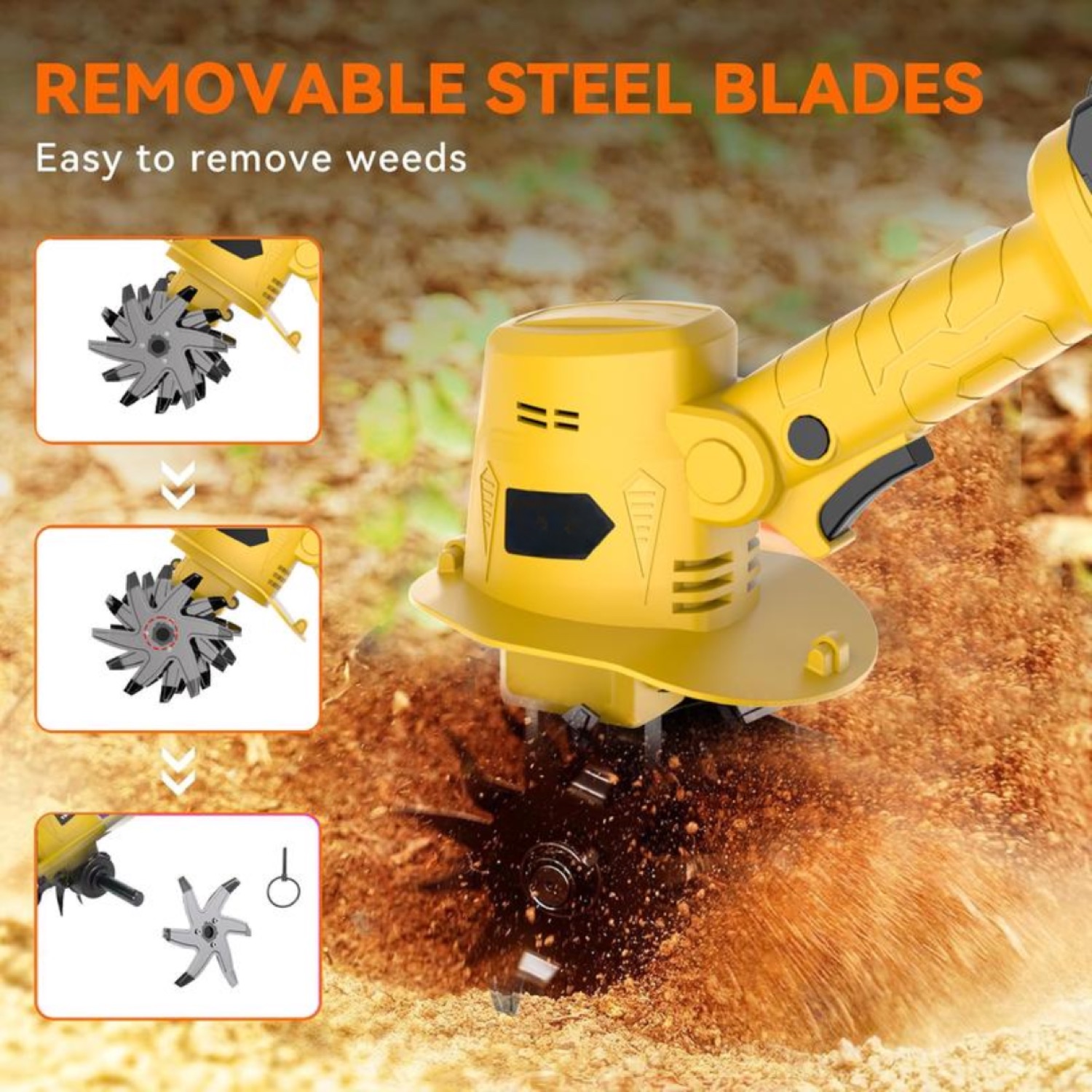
5 weeks agoTines pop off for cleaning, which matters more than I expected. Wet soil cakes on and I can actually get it off.
3 weeks agoUnder 10 inches tall so it lives on a shelf in the garage instead of taking up floor space all winter.
6 weeks agoBreak up the bed without breaking your back
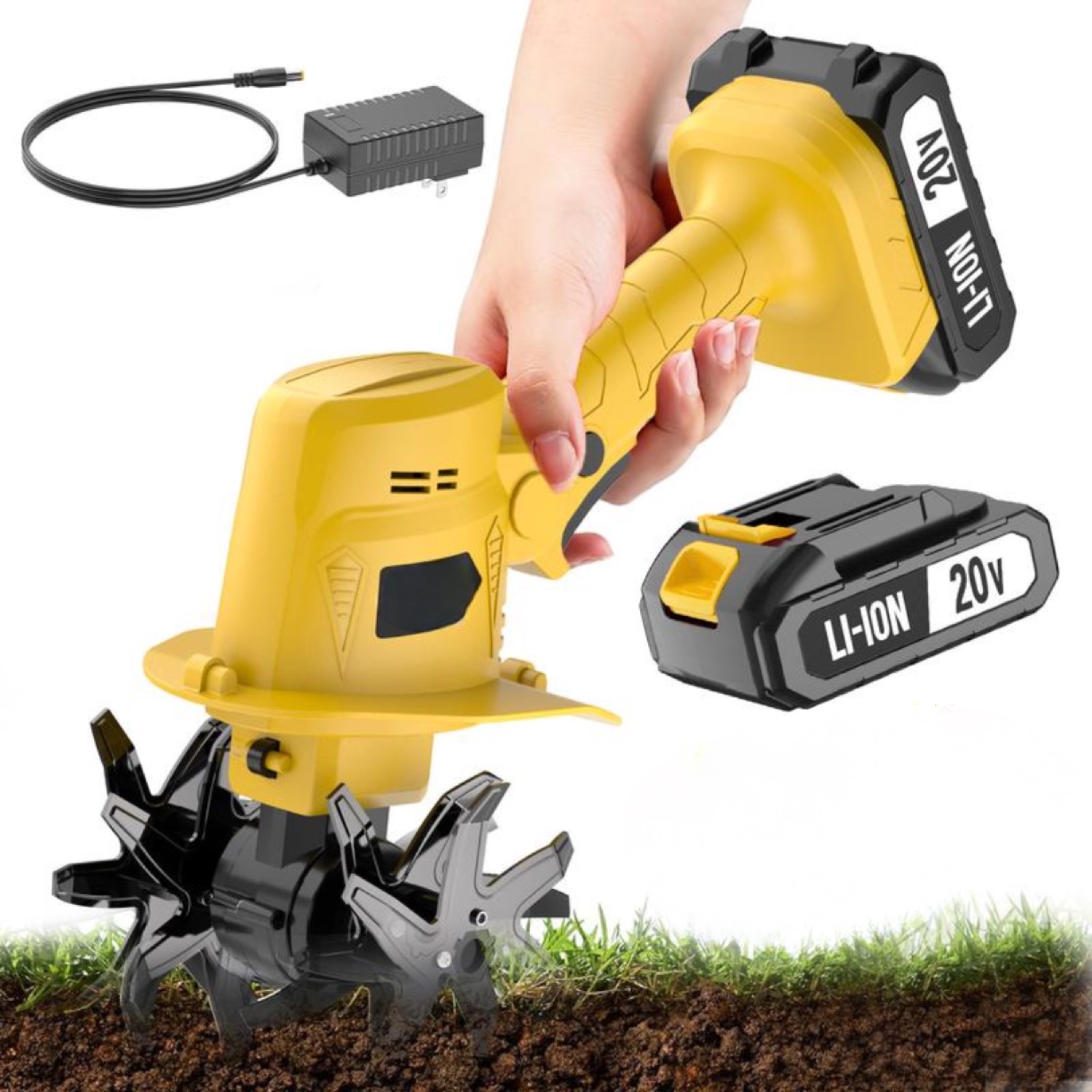
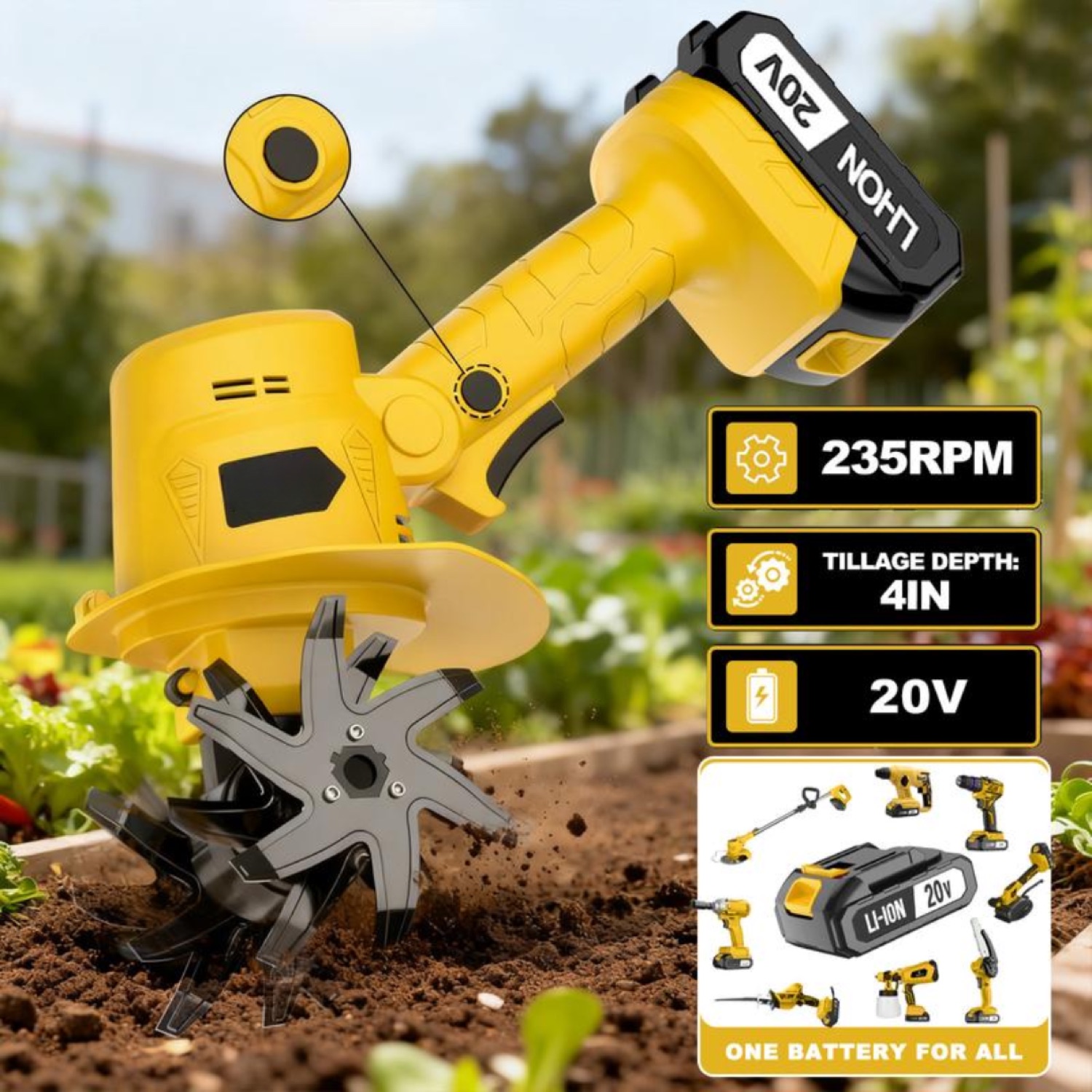
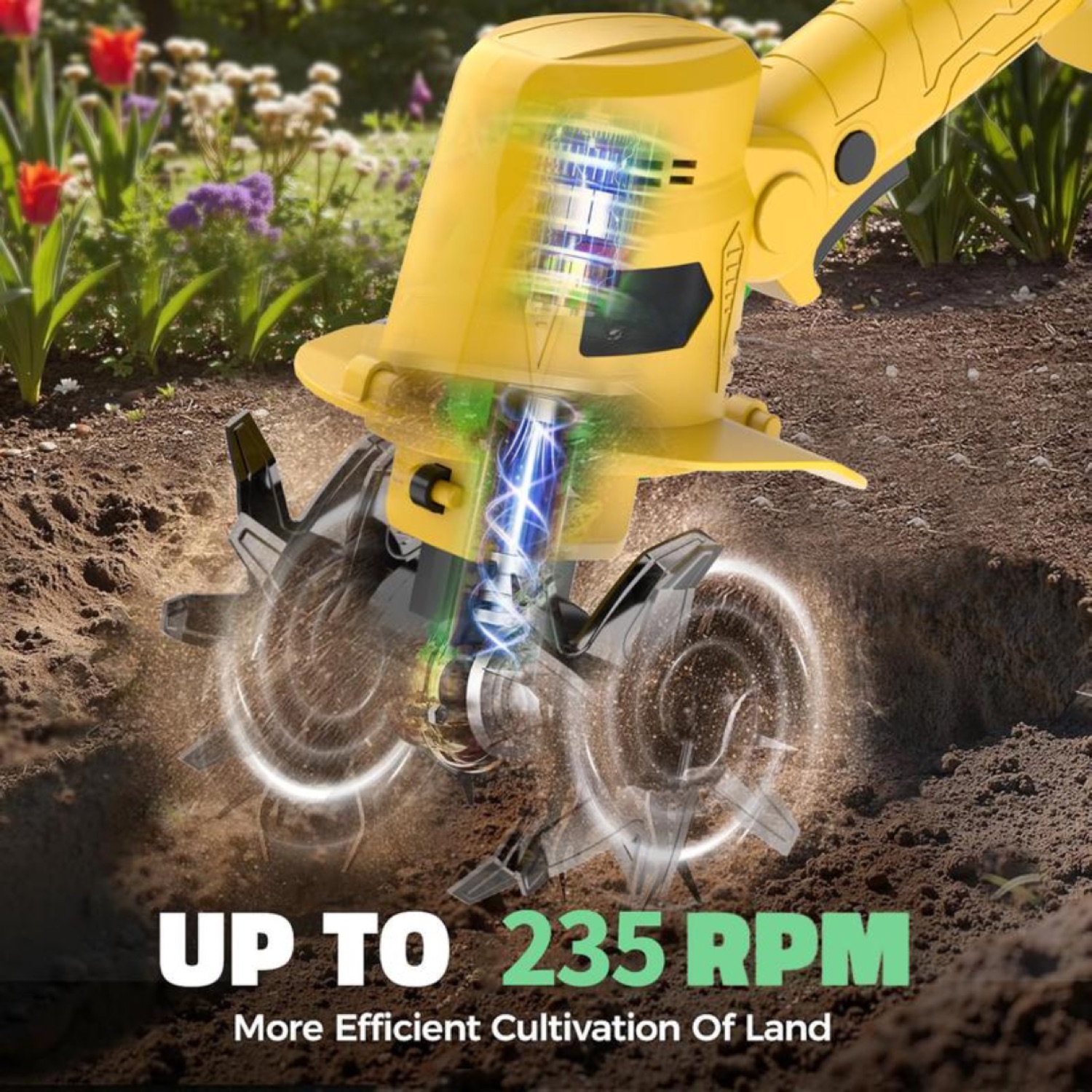
A 20V cordless cultivator with hardened steel tines at 235 RPM.
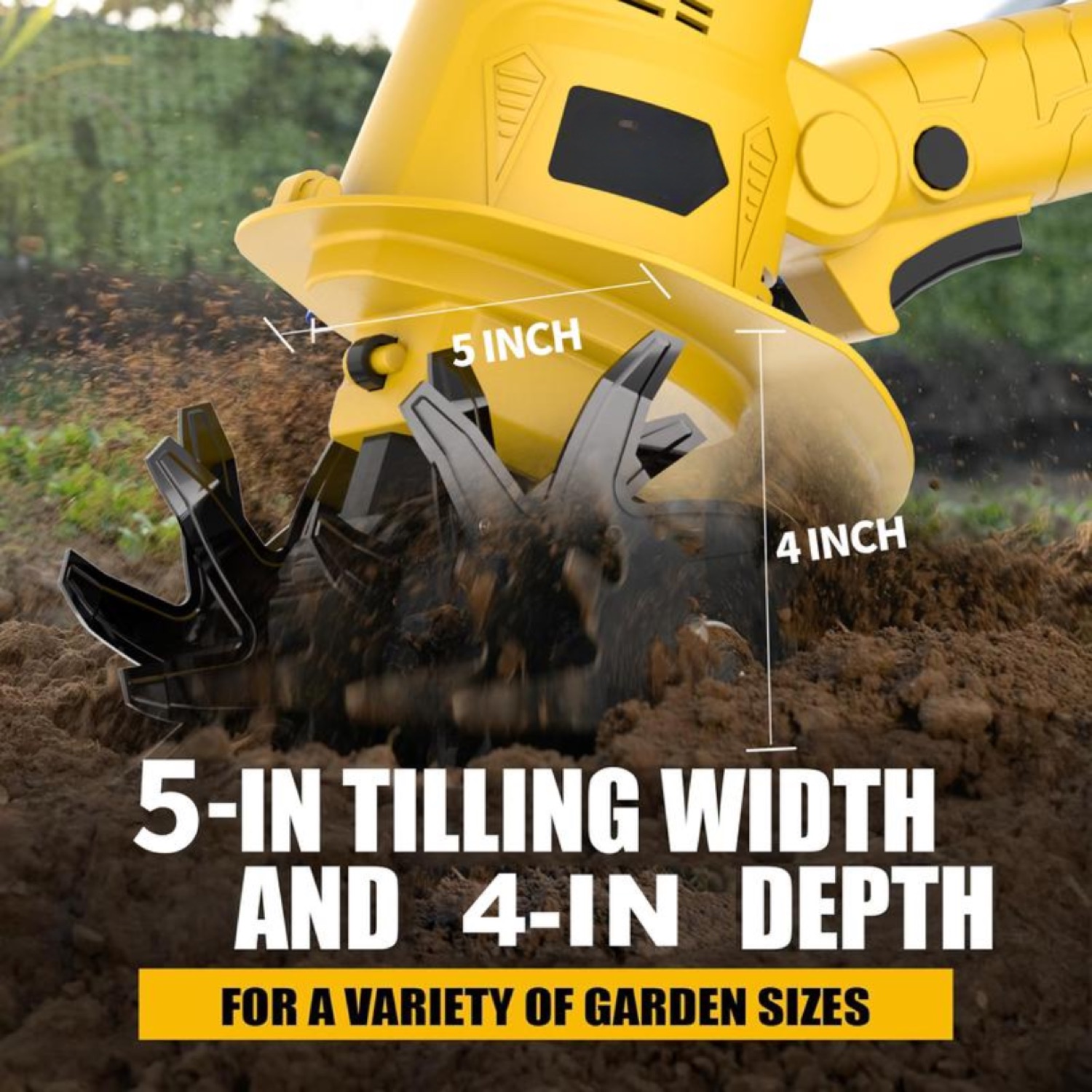
5 inches wide, 4 inches deep — sized for beds, borders and containers.

Petrol cultivators are the tool people stop using. Stale fuel, a choke that needs coaxing, and a pull start that beats you in April when the beds need turning.
This one runs on a 20V lithium-ion battery — included. Clip it in and press. No mixing, no priming, nothing to service at the start of every season.


A full-size rotavator cannot work a raised bed or get between established rows without taking out half the planting. Width is the reason.
At 5 in (12.7 cm) wide and 4 in (10.2 cm) deep this fits between rows, into borders, and inside containers — loosening soil and improving aeration exactly where roots need it.
The tines are hardened steel, so they bite into packed soil and cut through weed root instead of skating over the surface the way plastic or soft-steel tines do.
235 RPM is the useful range for a tool this size: fast enough to break compacted ground, controlled enough that the machine does not walk away from you.


Damp soil cakes onto any tine. Left on, it dries hard and takes the edge off the next job.
The blade assembly is removable, so rinsing it down after use is a one-minute job rather than a fight with a screwdriver and a hose.
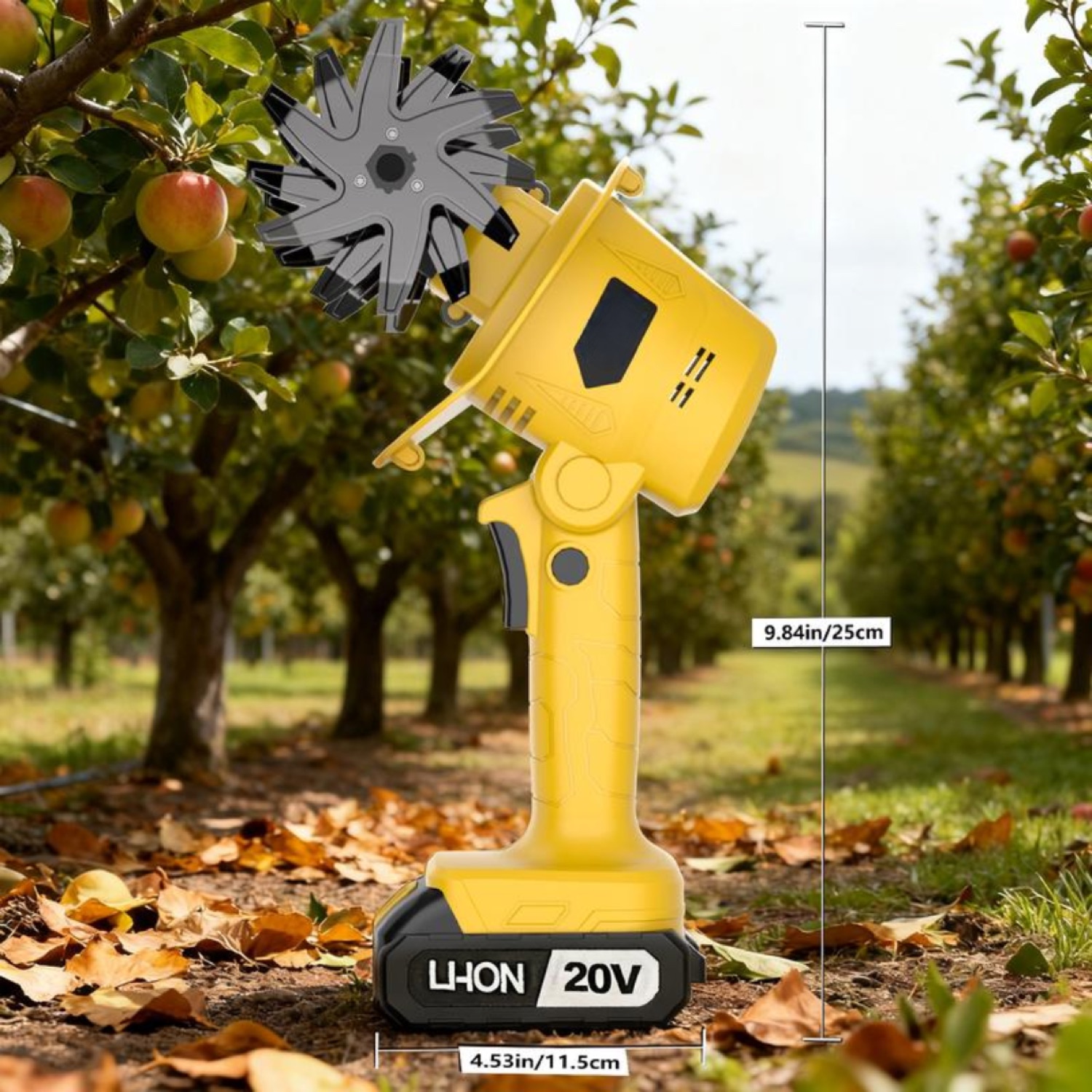
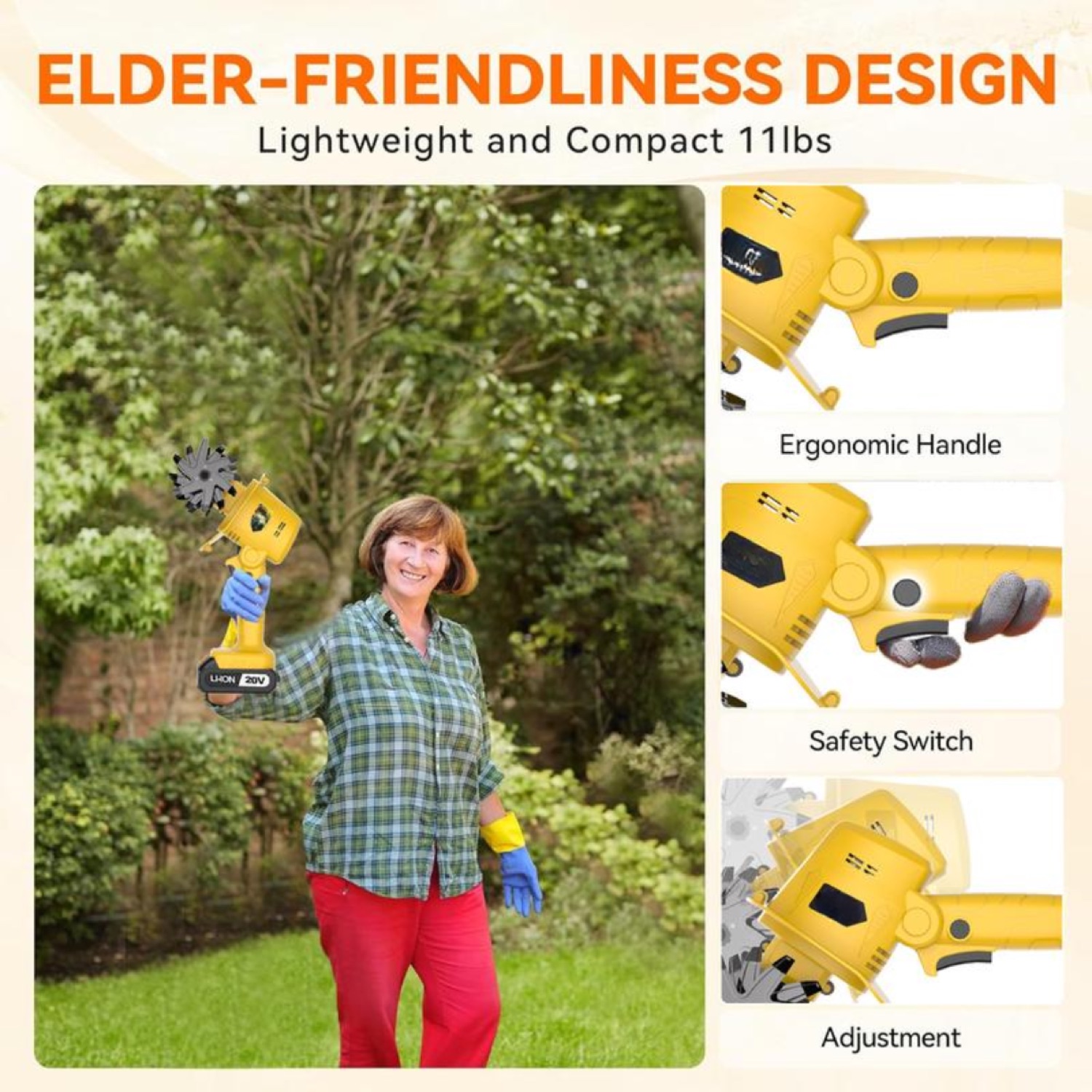
9.84 in (25 cm) tall with a 4.53 in (11.5 cm) base. It goes on a garage shelf over winter instead of standing in the corner of a shed.
Compact also means you carry it to the bed one-handed rather than wheeling it out as a whole operation — which is why it gets used for a ten-minute job.

1. Charge the battery fully
Fully charge the 20V lithium-ion battery before first use. A part-charged pack gives a misleading first impression of the motor.
2. Insert the battery
Push the battery into the tiller until it seats securely. A loose pack will cut out under load.
3. Work the soil
Let the tines do the cutting at their own pace rather than forcing the head down. Work to the 4-inch depth in passes on packed ground.
4. Clean after use
Remove the battery, then clean the tines. Soil left to dry on the steel is the main reason tines lose their bite.
Covered by a 12-month manufacturer warranty against defects in material or workmanship.

5 inches (12.7 cm) wide and 4 inches (10.2 cm) deep — sized for beds, borders, containers and between established rows.
That depends entirely on soil condition — loose bed soil draws far less than compacted clay. The source does not state a runtime and we are not going to invent one.
This is a cultivator for loosening and aerating soil, not a rotavator for turning unbroken turf. For a brand-new bed, strip the sod first.
Yes — one 20V lithium-ion battery comes in the box along with the steel tine blade assembly.
Remove the battery first, then take off the blade assembly and clean the tines. Do not leave soil to dry on the steel.
12 months against defects in material or workmanship under normal use.